Winter brings sharper pencils and tougher choices. If a Tiny Home is on your 2026 wish list, now is the time to weigh turnkey convenience against a lock-up shell or a DIY/trailer-only path. The right pathway in Victoria can save months and tens of thousands, without sacrificing comfort, safety or long-term value.
This guide compares real build options in Melbourne, explains what Hangan includes at lock-up, and sets out a clear STEP 1 to STEP 7 process with indicative payment stages and timelines. You will also find soft pricing signals to help budget responsibly, plus practical calls to action so you can see frames and near-finished homes side by side in Bayswater.
A quick word on quality and care. “Perfection is the only acceptable outcome for this team,” says one Hangan customer. Another adds, “Outstanding service, very professional and responsive throughout.” That patience and professionalism matter most when you are building to a budget.
Build pathways at a glance
There are three practical ways to reach a finished Tiny Home in Victoria:
- Turnkey build: a complete, ready-to-live home, ideal when time and certainty matter most.
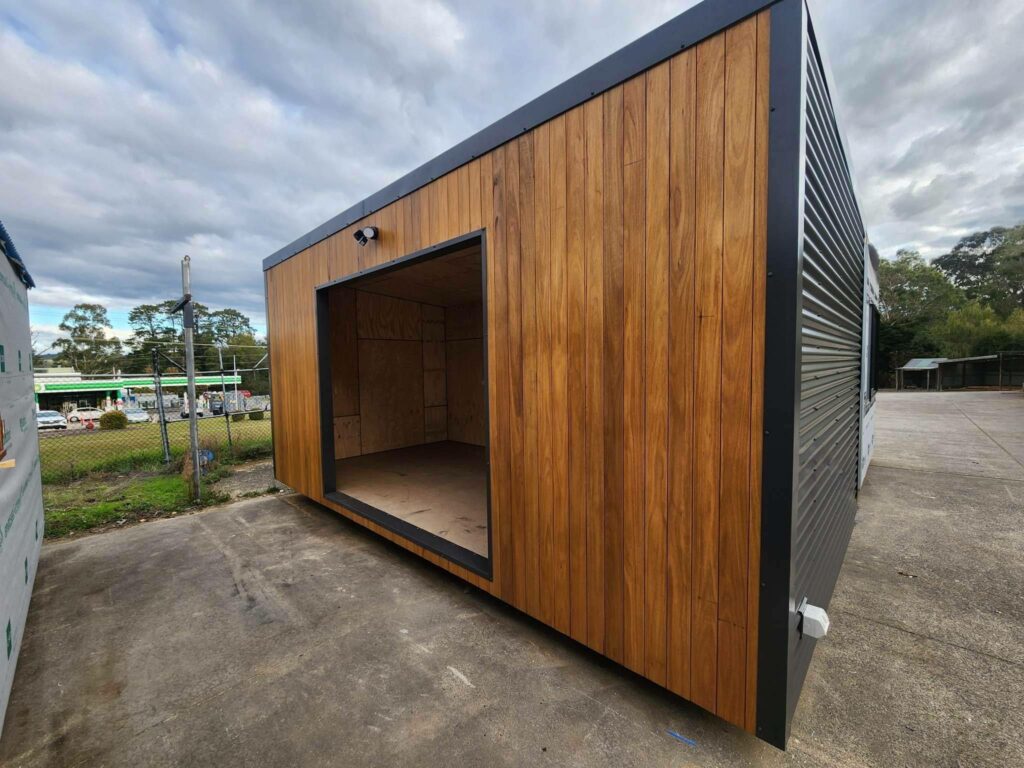
- Lock-up shell: a precision-built, weatherproof exterior with services coordinated so you can finish the interior.
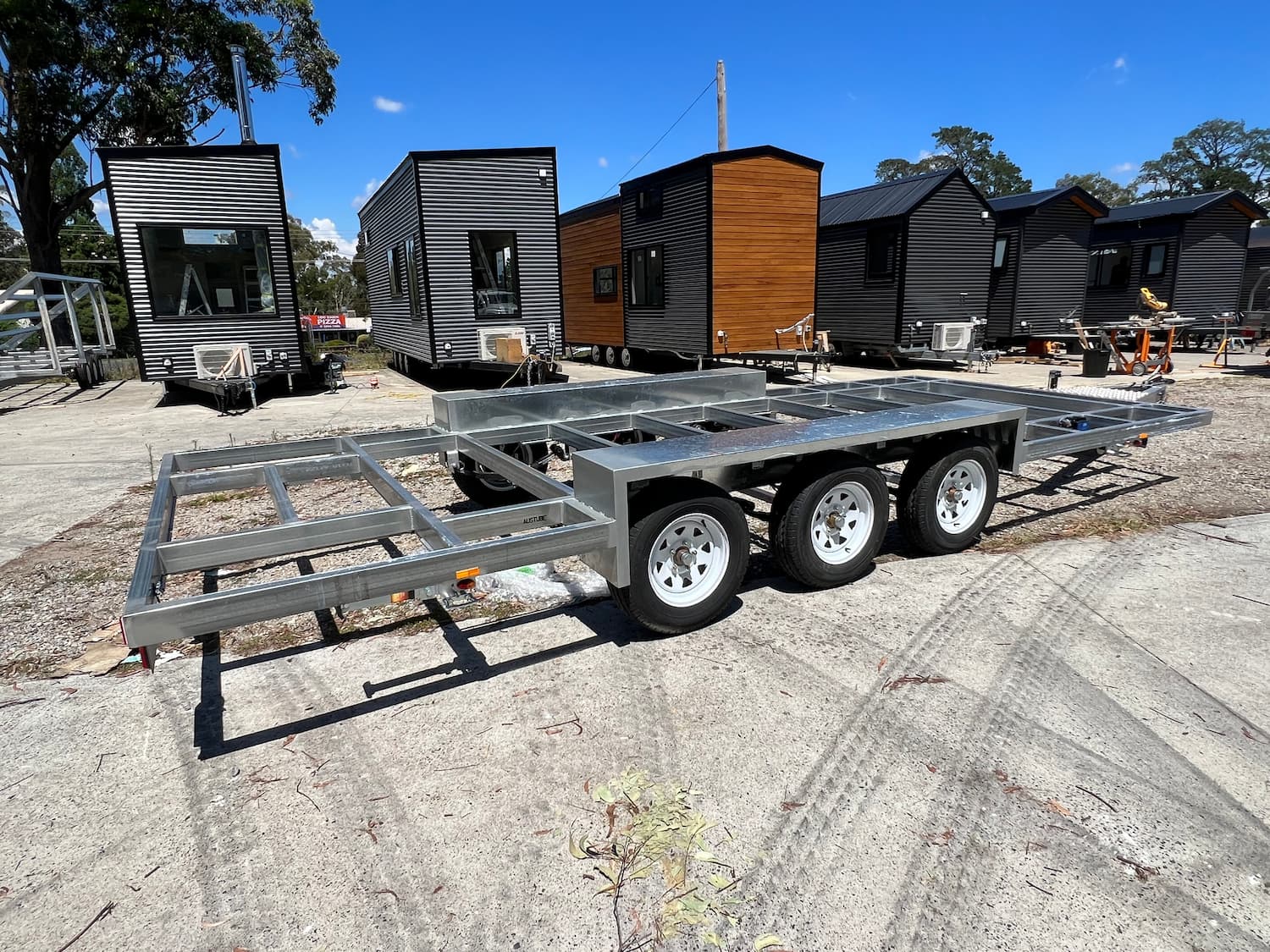
- DIY/trailer-only: custom trailer with drawings and guidance, best for experienced owner-builders.
Pricing varies by size, materials, fit-out and trailer specification. As a soft signal, DIY and trailer-led approaches are commonly 50 to 60 percent less than comparable turnkey outcomes, depending on scope and choices. Recent staged examples on the Hangan site show a fully furnished Bondi Tiny Home at $85,000 and an Airbnb-ready staged home at $100,000. Exact turnkey pricing is bespoke and requires a formal quote.
If you are comparing tiny houses in Melbourne or exploring backyard cabins and studios for an office or guest space, start with a walk-through of active builds in Bayswater to ground your decision in real numbers and finishes.
What is included at lock-up, and what remains
A Hangan lock-up shell is framed, wrapped and fully weatherproof. Exterior cladding, roofing, windows and doors are installed and sealed. The team also plans the services at this stage so owner-builders can move straight to lining and cabinetry.
What Hangan coordinates at lock-up
- Electrical rough-in pathways and cabling routes mapped by zone, with clear conduit runs for future solar or battery readiness.
- Plumbing penetrations and service pathways set and sealed, including wet-area locations.
- A/C placement prepared, including clearances and condensate routing.
- Trailer and floor penetrations aligned to maintain continuous insulation and support loads.
What usually remains for you or your local trades
- Internal insulation, vapour management and interior lining.
- Kitchen and bathroom fit-out, joinery and benchtops.
- Final electrical fit-off, lighting, switches and appliances.
- Paint, flooring, stairs or loft access details.
- Fixtures, fittings and any off-grid systems you plan to add.
This coordination avoids common DIY bottlenecks, such as late plumbing penetrations, awkward GPO placement or difficult A/C routing. It also keeps weight and balance aligned with Victorian road compliance.
Is a kit or lock-up shell cheaper than turnkey?
Often, yes. A lock-up shell typically costs less than a turnkey equivalent because you complete the interior at your pace with your own sweat equity or local trades. Savings come from labour and finish choices you control, while the shell quality locks in weather protection, squareness and windows that perform. A pure kit or trailer-only path can be cheaper again, but it demands more time, tools and construction confidence.
If you want the best of both worlds, the lock-up route is the sweet spot for many Melbourne owner-builders: you get a water and weatherproof structural envelope and pro-planned service pathways, then you handle lining, cabinetry and finishes.
How much does a Tiny Home cost in Victoria across paths
- Turnkey: bespoke pricing, driven by length (4.0 m to 11.0 m typical), materials, glazing, insulation, trailer type and fit-out level. Request a formal quote for accuracy.
- Lock-up shell: materially lower than turnkey due to unfinished interiors, with the benefit of pro framing, cladding, roofing and windows installed, plus service coordination.
- DIY/trailer-only: commonly 50 to 60 percent less than turnkey, with published trailer RRPs to help you budget. For example, a 3.5 tonne Dual-Axle Flat Top is listed at $10,790 and a Drop Deck at $11,290; 4.5 tonne tri-axle options range from $13,490 to $15,990 depending on spec.
For ideas, see models and downloadable plans on the Hangan site. If you are scanning options like Melbourne Tiny Homes and want to compare shells with finished builds, book a tour and bring a short wish list.
STEP 1 to STEP 7, with milestones, example payments and timelines
Every project is bespoke, but here is a realistic sequence that clients in Victoria can follow.
STEP 1 – Book a Bayswater tour and initial chat
Walk through frames, lock-up shells and near-finished homes. Discuss your block, approvals and timelines. Typical duration: 1 hour.
STEP 2 – Site review, permit path and budget range
Map likely planning and building needs for your council and decide on turnkey, lock-up or DIY. Timeframe: 1 to 3 weeks, depending on council checks and your availability.
STEP 3 – Design brief and trailer selection
Shape flow, light and storage; choose Flat Top for flexibility or Drop Deck for head height; confirm length from 4.0 m to 11.0 m. Timeframe: 2 to 4 weeks.
STEP 4 – Documentation, engineering and permit preparation
Produce bespoke plans, framing and window schedules; prepare for council discussions. Timeframe: 3 to 6 weeks.
STEP 5 – Production queue, frame and lock-up
Placement deposit secures your spot; trailer fabrication starts; frame up; lock-up achieved for shell builds. Factory time varies with scope, typically several weeks to a few months.
STEP 6 – Finishes, comfort and services
For turnkey builds, interiors, cabinetry, electrical fit-off and plumbing are completed, including winter-ready insulation and a 2.5 kW split-system. Timeframe: several weeks to a few months depending on complexity.
STEP 7 – Delivery planning, handover and siting
Confirm tie-downs, load distribution and access. On delivery, placement and final checks occur; guidance is available for local trade connections.
Example staged payments
Illustrative only; final contracts vary.
- Placement deposit to enter the queue and complete trailer drawings.
- 30 percent at build commencement.
- 15 percent at frame completion.
- 20 percent at lock-up.
- 15 percent at internal lining and rough-ins.
- 20 percent at completion, then walkthrough and delivery assistance.
What is the best option for owner-builders in Melbourne
For many, a lock-up shell is the most cost-effective balance of time, budget and quality. You get a square, sealed envelope with windows and doors in, service penetrations planned, and pathways for electrical and plumbing ready. You then finish interiors on your schedule, controlling spend on cabinetry, lining and fixtures. If you are highly experienced and fully tooled, a trailer-only start can reduce costs further. If time and turnkey certainty matter most, choose a complete build.
I cannot speak highly enough of the amazing team at Hangan. The quality is exceptional and they were patient with every question. Professional, responsive and helpful from tour to handover, they delivered a beautiful result.
FAQs
How much does a Tiny House cost in Victoria across build paths?
Turnkey is bespoke and needs a quote. Lock-up is typically lower because you complete interiors. DIY/trailer-only can be 50 to 60 percent less than turnkey, depending on scope.
Is a kit or lock-up shell cheaper than turnkey?
Typically yes. Lock-up saves on labour and lets you choose finishes while keeping pro-level structure and weatherproofing.
What work is included at lock-up?
Framing, wrap, roofing, cladding, windows and doors installed and sealed, with rough-in pathways, penetrations and A/C placement coordinated. Interiors, fit-offs and joinery remain.
How do staged payments and milestones work?
Milestones often follow frame, lock-up, lining and completion. An example sequence is 30 percent at start, 15 percent at frame, 20 percent at lock-up, 15 percent at lining and rough-ins, and 20 percent at completion. Final contracts are bespoke.
What is the best option for owner-builders in Melbourne?
Lock-up shells suit most owner-builders who want quality structure, coordinated services and interior control. Trailer-only is best for highly experienced DIYers.
Next steps
- Download plans and compare layouts, storage and trailer choices.
- Request a callback for pricing signals and timelines, and expect a response within 24 hours.
- Book a factory tour in Bayswater to walk frames and near-finished homes side by side.
If you want to see current builds and discuss permits and siting, you can book a tour now through the Bayswater page. To explore layouts and discuss a custom Tiny Home with a Melbourne team, visit Tiny Homes by Hangan, a trusted tiny house builder Melbourne clients turn to for bespoke solutions. You can also review options for backyard cabins in Melbourne if you are weighing a studio or guest retreat.