If you have fallen for the charm of tiny living, you already know the difference between cute and truly liveable. A good tiny house feels open, organised and effortless to use, even on a rainy Tuesday when laundry, laptops and life all collide.
From our Bayswater workshop in Melbourne, we have designed and built 50+ custom tiny homes. Here is the practical playbook we use every week to turn small footprints into comfortable, durable homes that pass the day-to-day test.
Start with flow, light and air
Great layouts start with how you move. Aim for a simple circulation path that avoids zigzags and squeeze points. Doors should open into clear space, not directly into benches or the sofa. If you are using a loft, align the ladder or stairs so they land in a natural gap, not the middle of your kitchen prep zone.
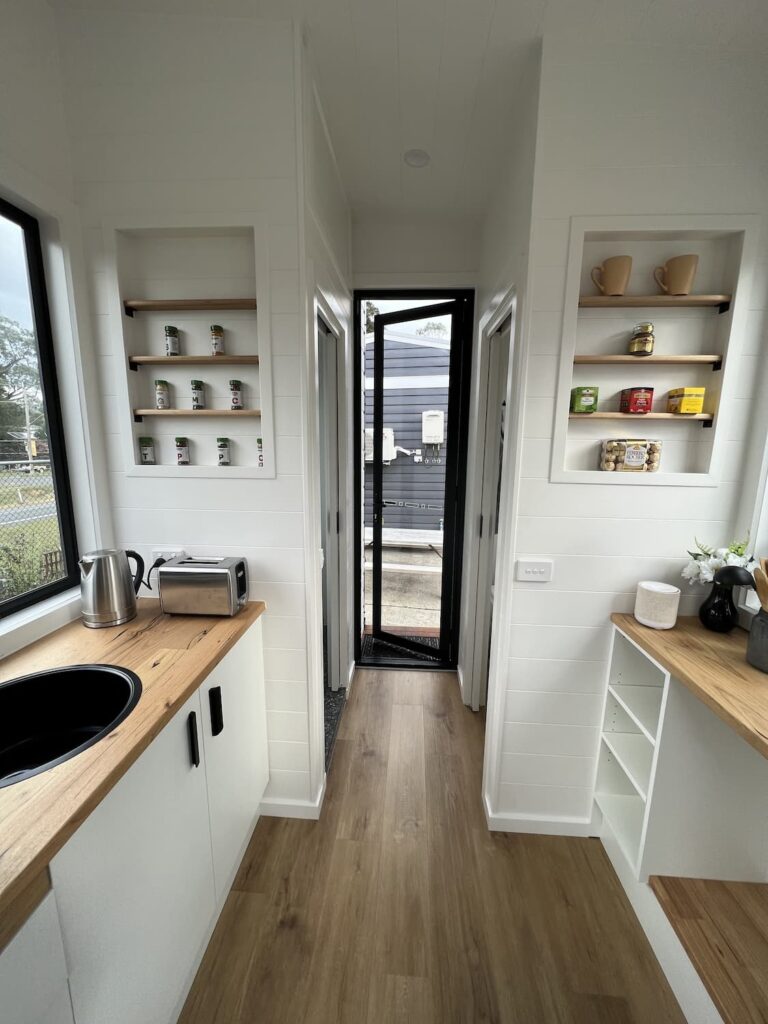
Natural light and ventilation make the biggest perceived-space gains for the least cost. Pair a large viewing window with high-level operable windows or a skylight to create cross-ventilation. In Melbourne’s mixed climate, double-glazed aluminium windows and a small split system air conditioner typically handle comfort well. Position windows to avoid dark corners and keep at least one clear wall for tall storage.
Vertical storage and multi-use furniture
Storage works best when it starts at framing stage, not after move-in. We like to pre-plan tall modules that run to the ceiling and shallow niches above benches. Use the full depth under beds and stairs for drawers, not dead voids. Keep everyday items between knee and shoulder height so you are not climbing constantly.
Multi-use furniture should be sturdy, not gimmicky. A dining bar that doubles as a workbench, a sofa with lift-up storage, and a floor-level bed platform with deep drawers are dependable winners. Build fewer, better pieces and fix them to structure for travel safety and long-term durability.
Stairs, ladders and realistic access
Ladders look minimal, but they are not for everyone. If a loft is your main bedroom, consider space-efficient stairs with alternating treads or a compact L-shape. Minimum safe riser height and consistent tread depth matter more than clever shapes. Leave headroom at the loft entry so you can step off without a crawl. If you prefer a floor-level bed, design it early and absorb the storage elsewhere.
Electrical planning, rough-ins and load management
Electrical choices shape your daily experience, so bring them forward in design.
- Power connection options: Most tiny homes in Victoria connect to 240 Volt mains through an RV inlet or hardwired connection by a licensed electrician. Off-grid setups pair solar, batteries and an inverter sized to your loads.
- How much power you need: Make a list of real appliances and duty cycles. Typical daily drivers include a 2.5 kW split system, LED lighting, induction or electric cooktop, bar fridge or full fridge, and electric hot water. Many clients are comfortable on a 15 Amp inlet when usage is staggered, but heavy simultaneous loads can trip limits. If you plan electric oven, induction, hot water and A/C together, design for a 32 Amp supply and separate circuits. Off-grid systems need thoughtful sizing and habit changes, often with gas or heat-pump hot water to reduce battery strain.
- Rough-ins: Decide where your switchboard, inverter, battery bank and service chases will live before cladding goes on. Keep cable runs short and accessible, and leave a conduit spare for future solar. In our builds, we draw trailer and framing plans around services so penetrations do not clash with cross-members or insulation.
If you want a hand mapping loads and circuiting, our team can step you through a tiny home electrical fitout in Melbourne during a factory tour.
Plumbing essentials, hot water and waste
Wet areas are compact, but they are unforgiving if planned late.
- Hot water: Electric storage is simple but power-hungry; a compact heat-pump unit is more efficient and better for off-grid. Instant gas is common where permitted. Place the unit close to kitchen and bathroom to shorten pipe runs and reduce wait times.
- Grey and black water: Check council or park rules first. Many sites require grey water to a gully trap or reed bed, and black water to sewer or a sealed tank. Composting toilets are a viable option and reduce plumbing complexity, but still need ventilation and a serviceable position.
- Serviceability: Concentrate kitchen, laundry and bathroom on one side where possible to simplify drainage and maintenance. Install proper traps, isolation valves and accessible clean-outs.
Trailers, weight and the right foundation
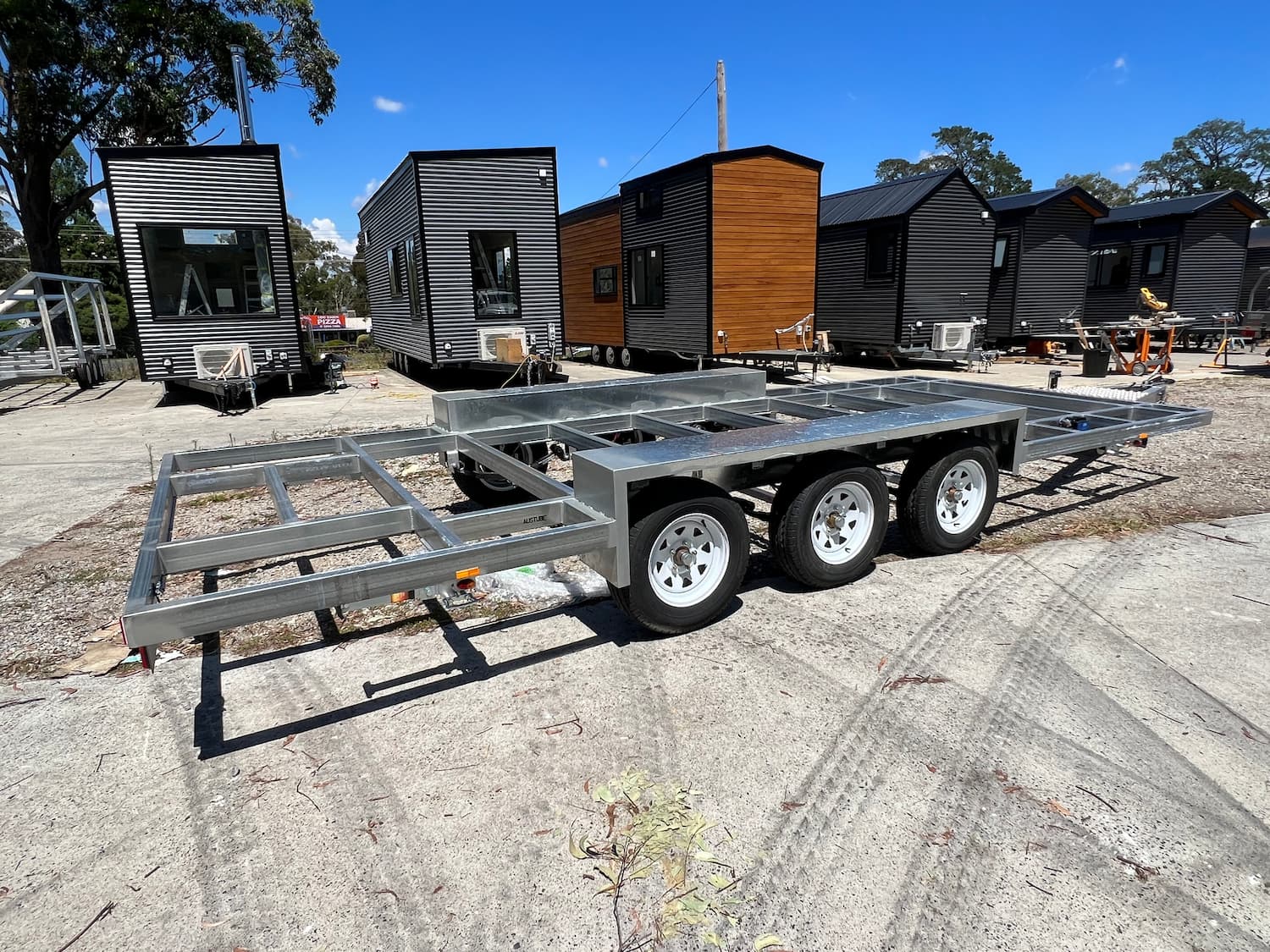
Under-spec’d bases are the most expensive mistake we see. Your trailer is your foundation. Match the rating to your finished weight with margin, and balance loads so heavy items like water tanks, batteries and appliances sit over or just forward of axles. For tall-loft designs, a Drop Deck trailer can give valuable head height; for simple layouts, a Flat Top keeps things flexible. If you plan a fixed secondary dwelling, talk to us about a skid or stumped footing solution and the relevant Victorian building-permit pathway.
So, what type of foundation is best? For tiny homes on wheels, a purpose-built, compliant trailer is the right choice. For fixed installations under the Victorian secondary dwelling rules, lightweight steel skids or stumped footings are typically best, subject to engineering and soil conditions. Either way, design structure and services as a single system.
If you want to see and compare bases side by side, you can explore trailer options for a road-legal tiny house trailer in Melbourne at our workshop displays.
Off-grid options that actually work
Off-grid is easiest when you reduce loads first. Induction cooktops are efficient but spike demand; many off-grid clients choose gas cooking and a heat-pump hot water system. Aim for good insulation, quality glazing and a sensible A/C set point. Right-size solar and batteries to your climate and habits, and plan a backup such as a small generator for long cloudy runs. Rainwater collection works well with first-flush filtration and a simple two-stage filter at the sink.
Permits, siting and the Melbourne reality
Approvals vary. In Victoria, there is a pathway that can waive planning permission for eligible secondary dwellings under 60 m2, but a building permit is still required and overlays can change the picture. Tiny Houses on Wheels are registerable moveable dwellings or custom caravans with separate rules. Before you commit, request written guidance from your council. If you are exploring backyard studios or cabins, our pages on backyard cabins in Melbourne outline common placement considerations.
Common mistakes to avoid
- Under-spec’d trailers and brakes, leading to compliance or safety issues
- Poor weight distribution that makes towing unsafe and floors bouncy
- No permit pathway, causing delays or forced redesigns
- Cramped lofts with unsafe ladders or no headroom
- Tiny windows and no cross-ventilation, making the home feel dark
- Services planned late, leading to awkward penetrations and visible conduits
- Too much loose furniture that rattles during transport
How Hangan’s staged process saves headaches
Our seven-step approach keeps design, structure and services aligned. We start with ideas and a factory tour, lock in a placement deposit, and produce trailer-specific drawings and frame plans. Payments are staged across trailer order, frame, lock-up, rough-ins and completion so you can see progress and make informed choices. You can opt for turnkey, lock-up or DIY paths, and we are happy to coordinate trades or hand you a weatherproof shell with windows and doors installed.
Clients often tell us the walkthroughs and drawings helped them avoid costly mid-build changes. One recent review described the build quality as exceptional and the process smooth and supportive, which is exactly what we aim for.
Tiny house pre-build checklist
- Confirm your siting rules with council in writing
- Choose your foundation: trailer type or fixed footings
- Map your layout for flow, ladder or stair access and headroom
- Lock in window sizes and positions for light and cross-breeze
- List appliances and size your electrical supply, circuits and solar readiness
- Decide hot water type, grey/black water handling and service locations
- Set storage goals and integrate them into framing
- Plan delivery access, parking and tie-down points
If you would like a head start, you can review examples and download plans, then chat with a tiny house builder in Melbourne about adapting them to your site and budget.
Quick FAQ
- What makes a good tiny house? Clear circulation, generous light and ventilation, integrated storage, realistic stair or ladder access, and well-planned services. Structure and trailer must match the finished weight with margin.
- What are common mistakes? Under-rated trailers, poor weight balance, no permit plan, cramped lofts, and late service planning that limits options.
- How do you connect a tiny home to power? In Victoria, most connect via a licensed 240 Volt mains hookup using an RV inlet or hardwired connection. Off-grid setups use solar, batteries and an inverter.
- How much power do you need? It depends on appliances and how many run at once. Many manage on a 15 Amp inlet with staggered use. If you want electric oven, induction, hot water and A/C together, consider a 32 Amp supply and dedicated circuits. Off-grid systems must be sized to loads and climate.
- What foundation is best? For mobile use, a purpose-built compliant trailer. For fixed secondary dwellings, engineered skids or stumped footings, subject to permits and soil.
Ready to design a tiny that lives big?
A well-planned tiny home feels bright, calm and capable because the details were solved before a single sheet of cladding went on. If you want practical drawings, staged build options and Melbourne-specific guidance, download our free starter plans and book a design consult. You can also book a one-on-one factory tour in Bayswater through our tiny home consultations in Bayswater page to see frames, lock-up shells and near-finished homes side by side.