
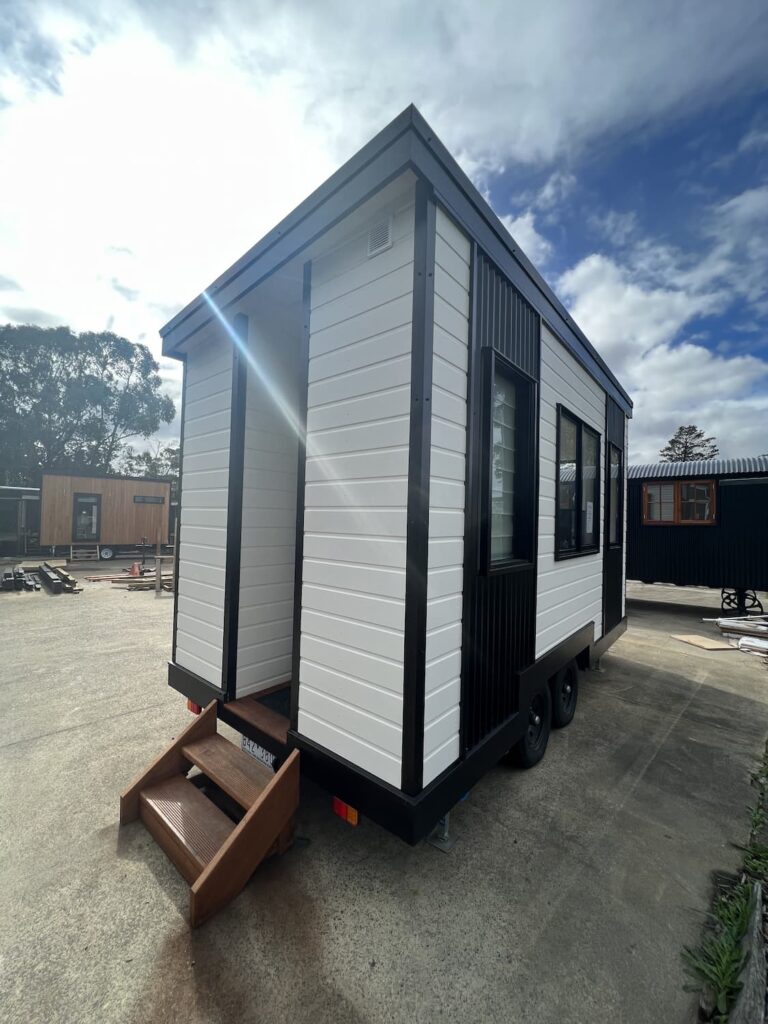
If you are starting to price a tiny home in Melbourne or regional Victoria, you will quickly find that the honest answer is, it depends. The good news is that you can control most of the drivers, from trailer and size choices to
fit‐out, off‐grid systems and how much of the build you take on yourself. This guide breaks down real Victorian costs, explains Hangan’s staged options, and gives you a simple path to budget, finance and timeline.
What actually drives the cost in Victoria
Several factors shift the price up or down. Think of these as dials you can tune to match your budget.
- Length and layout, 4 m to 11 m: Smaller shells use fewer materials and take less labour. A 4 to 4.8 m studio or weekender with a simple kitchen and no loft will sit at the lower end. A 7.2 m to 11 m custom layout
- with a loft, full bathroom, laundry nook and built‐ins will cost more, both in materials and hours.
- Trailer selection: Flat top vs drop deck, axle rating and compliance all matter. A drop deck gains roughly 200 mm extra head height between the wheel arches, great for loft comfort. Flat tops avoid wheel boxes and
- make door placement flexible. Heavier axles support longer homes, but they also increase cost.
- Materials and finishes: Windows, doors, insulation type, cladding, roofing, kitchen joinery, benchtops, flooring and fixtures all vary widely. You can choose robust and simple, or highly bespoke and premium. Each
- finish has a cost and a weight implication.
- Off‐grid systems: Solar, batteries, inverters, rainwater storage, pumps and composting toilets add upfront cost. They can reduce ongoing bills and are a common choice on rural sites or where connection is not
- feasible.
- Interior complexity: Built‐in storage, stair drawers, Murphy beds, tiled showers, skylights and custom cabinetry add functionality, but also hours. A compact, open plan with modular furniture will be more
- economical than a fully custom interior.
Trailer prices you can bank on
Your trailer is the foundation of the build. Tiny Homes by Hangan fabricates road‐legal units in Melbourne with sizes and axle ratings to suit your design. Current retail pricing for trailers is:
- 3 Tonne, Dual‐Axle: Flat Top $9,490; Drop Deck $9,990.
- 3.5 Tonne, Dual‐Axle: Flat Top $10,790; Drop Deck $11,290.
- 4.5 Tonne, Tri‐Axle models: Flat Top $13,490 to $15,490; Drop Deck $13,990 to $15,990 depending on spec.
- 10 Tonne, Truck Axle for 11 m builds: Flat Top $41,490; Drop Deck $42,490.
These figures give you a clear starting point for budgeting and help anchor decisions about length and layout. If you only need a solid base for an owner‐build, a trailer purchase alone keeps costs tight and timelines short.
You can also look at a road‐legal tiny house trailer melbourne with tailored widths and brake systems for Victorian compliance.
Turnkey, lock‐up and DIY, what is included and how they compare
Hangan offers three main paths, so you can match cost to how hands‐on you want to be.
- Turnkey: We design and build end to end. You get a move‐in ready home with cabinetry, plumbing, electrical, A/C rough‐ins and fit‐off, internal lining, fixtures, painting and final detailing completed. It is the most
- convenient path and the highest upfront cost.
- Lock‐up: We build the structural shell to the water and weatherproof stage, install windows and doors, and complete the frame. You finish the interior. This can save a significant amount and leaves you in control
- of finishes and trades.
- DIY or trailer‐only: You purchase a trailer or trailer plus steel frame kit and complete the entire build yourself. For capable owner‐builders, this approach is typically around 50 to 60 percent less than a comparable
- turnkey. Time, tools, safety and compliance still matter, so plan carefully.
Staged payments, transparent and milestone based
Budgeting is easier when you know what you are paying for and when. Hangan uses a clear schedule:
- Initial payment, 30 percent, triggers trailer and window orders and build start.
- Second payment, 15 percent, on frame completion.
- Third payment, 20 percent, at lock‐up when the shell is weatherproof with windows and doors in.
- Fourth payment, 15 percent, after insulation, rough‐in electrical, plumbing and A/C, and once internal lining is underway.
- Final payment, 20 percent, at completion after a walk‐through and before delivery support.
Each step links to a tangible milestone so you can track progress and cash flow.
So, how much does a tiny house cost in Victoria
Because every home is custom, quotes vary by size and finish. As a broad guide, smaller shells on lighter trailers with simple interiors can keep your total well below larger, feature‐rich designs. A DIY or lock‐up approach
reduces the builder hours you pay for and helps you allocate spend to visible upgrades like a better kitchen or solar. If you want a ballpark for your ideas, request a tailored quote; it is the fastest way to get an accurate figure
for your site and timeline.
How much does a custom tiny house cost
Custom means you control the spend. The trailer and length set the base, then materials, windows, cabinetry and systems add increments. Expect a custom quote to reflect your chosen model length, trailer, and
specification detail. If budget is tight, start with a simpler finish list, keep the footprint shorter, and allow for future upgrades.
Is a kit home cheaper than building
If you are comparing a DIY kit or trailer plus frame to a full build, the owner‐build path can reduce total cost by roughly 50 to 60 percent compared with turnkey, mainly because you substitute your time for labour. You still
need to budget for tools, fixtures, compliance, and trade help for electrical and plumbing. If your time is limited, a lock‐up build often hits the sweet spot between savings and speed.
Are smaller homes cheaper to build
Yes, within the same specification level, fewer metres equals fewer materials and hours. A shorter home also needs a lighter, lower cost trailer and may avoid higher axle ratings. That said, very small spaces still benefit from
smart design. Using multi‐functional furniture and vertical storage gives you the feel of a larger plan without the extra length.
Budgeting tips that work in Melbourne
- Choose the trailer early: It sets the upper limit on size, weight and cost. Confirm axle rating and brake requirements for Victorian roads before you lock in the design.
- Keep the envelope simple: Straight rooflines, standard window sizes and fewer external corners reduce labour.
- Standardise finishes: Off the shelf windows and doors, prefinished linings and modular kitchens are cost effective.
- Value engineer the interior: Use open shelving, laminate benchtops and vinyl plank flooring to get durability without the premium price of solid timber or stone.
- Plan off‐grid in stages: Wire and plumb for future solar and tanks even if you do not install them on day one.
Finance pathways and timelines
Traditional home loans rarely suit movable tiny homes. Clients in Victoria commonly use:
- Personal loans with fair rates for secured or unsecured lending.
- Handy Pay, a third party option that has worked for many tiny home clients.
- Savings and equity redraws.
Start design 9 to 12 months before you want to move in. This allows time for concept development, trailer selection, lead times on windows and materials, and the build itself. For DIY, factor in your availability and weather;
most owner‐builds take longer than expected, so add a buffer.
When to reach out and what happens next
- Step 1, book a factory tour to see current builds, scale and finishes.
- Step 2, secure your spot with a build placement deposit and get your frame plans drawn.
- Step 3, refine your quote with selections and decide on turnkey, lock‐up or DIY.
If you are exploring options around secondary dwellings or studios, you can also learn how backyard cabins melbourne projects are scoped and priced, including placement and services.
Summary, choose your path with confidence
Tiny homes are not one price fits all. In Victoria, your cost is shaped by length, trailer type, materials, systems and how much of the build you want us to handle. Turnkey gives you a seamless, move‐in ready result.
Lock‐up keeps quality high and hands you the interior to finish at your pace. DIY or trailer‐only can be half the cost of turnkey if you have the time and skills. With clear trailer pricing, milestone payments and a practical
design process, you can build a realistic budget and timeline. Ready to run the numbers for your idea and see builds in person, talk to a tiny house builder melbourne for a detailed quote or book a tour at our Bayswater
workshop.


